
deidreohea9712
About deidreohea9712
The legal framework in the United Kingdom is founded on a long tradition of judge-made law, combined with statutes passed by the UK Parliament.
Legal aid is available for those who cannot afford representation, although changes in funding and eligibility criteria have raised concerns about equitable access. The Scottish Legal Aid Board oversees the administration of legal aid in both civil and criminal matters. Legal access in Scottish courts has been a topic of discussion in recent years.
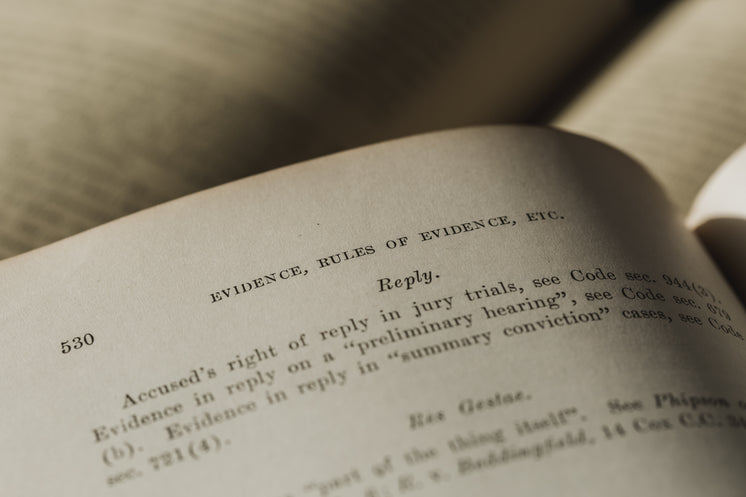 As the courts began to operate more regularly, a body of legal precedents began to emerge, which laid the foundation for what would later become the common law system. Common law and its emergence was a direct result of the creation of the King’s Court. Common law refers to a body of law based on judicial decisions rather than written statutes, and it formed the backbone of the English legal system. The decisions made by judges were recorded and used as precedents for future cases, providing consistency and predictability in legal outcomes.
The Scottish Parliament also has the power to create new laws in devolved areas, which means Scottish courts may interpret and enforce statutes differently from their counterparts in England and Wales. Debates around the role of the Supreme Court and devolution continue, particularly as Scotland navigates questions around independence, human rights, and legislative autonomy.
Additionally, the introduction of court fees has also played a role in limiting access to justice. Some claim that high court fees effectively price certain individuals out of the legal system, particularly in civil disputes and family law cases. These fees have increased over time, and critics argue that they act as a barrier to justice for individuals on low incomes. Court fees are charges imposed on individuals and organizations for the privilege of using the court system.
From the High Court of Justiciary to the Justice of the Peace Courts, Scotland’s legal system reflects centuries of tradition alongside ongoing reform. As legal questions grow increasingly complex in areas like technology, constitutional law, and human rights, the Scottish courts remain at the forefront of delivering fair, efficient, and independent justice for all.
In criminal cases, the enforcement of the sentence may involve the probation service, police, or prison system, depending on the nature of the punishment. In civil cases, this may involve collecting damages from the losing party or ensuring that a court order is complied with. Once a judgment is made, it is up to the winning party to ensure that the judgment is enforced. Another important part of UK court procedures, is the enforcement of court orders.
Decisions from UK courts are not just important domestically—they are also highly influential internationally. Because the UK’s common law system has been adopted in many other countries, particularly those in the Commonwealth, rulings from UK courts often serve as persuasive authority in legal systems around the world.
Scotland also has a separate system for youth justice, which places emphasis on rehabilitation rather than punishment. Panels are made up of trained lay members and aim to provide holistic support and supervision. The Children’s Hearings System focuses on the needs and welfare of children and young people who commit offences or are in need of care and protection.
These decisions help to clarify the application of criminal statutes and legal principles, such as mens rea (criminal intent) and the rules of evidence. In criminal law, important decisions are frequently issued by the Crown Court and the Court of Appeal (Criminal Division).
The first step in most court procedures is submitting a claim. This document sets out the details of the case, including the legal basis for the claim and any evidence supporting it. In civil cases, the claimant (the person making the claim) must file a formal complaint, known as a ”claim form” or ”particulars of claim,” with the court. If you adored this article therefore you would like to acquire more info relating to 1to1Legal Law Firm Referrals i implore you to visit our internet site. In criminal cases, the process begins with the arrest of the defendant, followed by charges being brought against them by the police or the Crown Prosecution Service (CPS).
The 18th and 19th centuries. The Industrial Revolution brought about major societal changes, and the legal system had to adapt to new challenges. During this time, legal reforms were introduced to address issues such as property rights, workers’ rights, and criminal justice. The growing urban population, increased commercial activity, and more complex social issues required reforms to the court system.
Appeals is an important part of the judicial system in the UK, as it allows for decisions to be reviewed and corrected if necessary. However, not all decisions are appealable, and in order to appeal, the appellant must have valid grounds, such as a mistake of law, procedural irregularities, or new evidence that was not available at the time of the original trial.
This stage is crucial for organizing the litigation process and ensuring that both sides are prepared for the trial. Once a claim is filed, the court will issue a date for a preliminary hearing or case management hearing. This is typically an early stage where both parties (the claimant and defendant) meet with the judge to discuss the case, set deadlines for filing documents, and schedule subsequent hearings.
No listing found.
 Arabic
  English